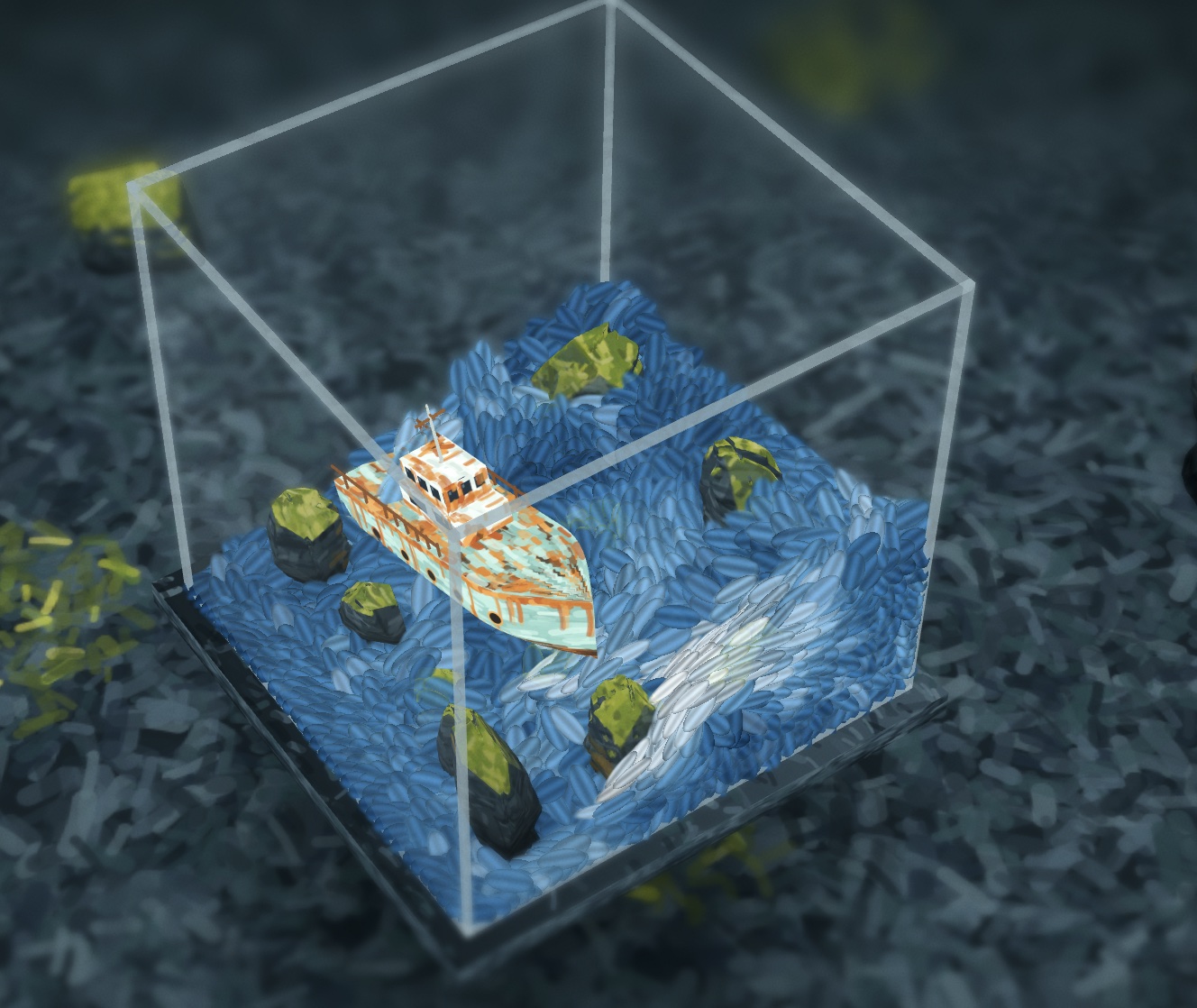
The water simulator goes 3D: a glass cube of painted water with a rusting shipwreck and mossy boulders inside, seen like a tilt-shift photograph of a model. Tip, spin and slide the tank and the water answers. How FLIP turns a few thousand particles into water, how moving the tank becomes forces the water feels, and how I quieted my laptop's fans.
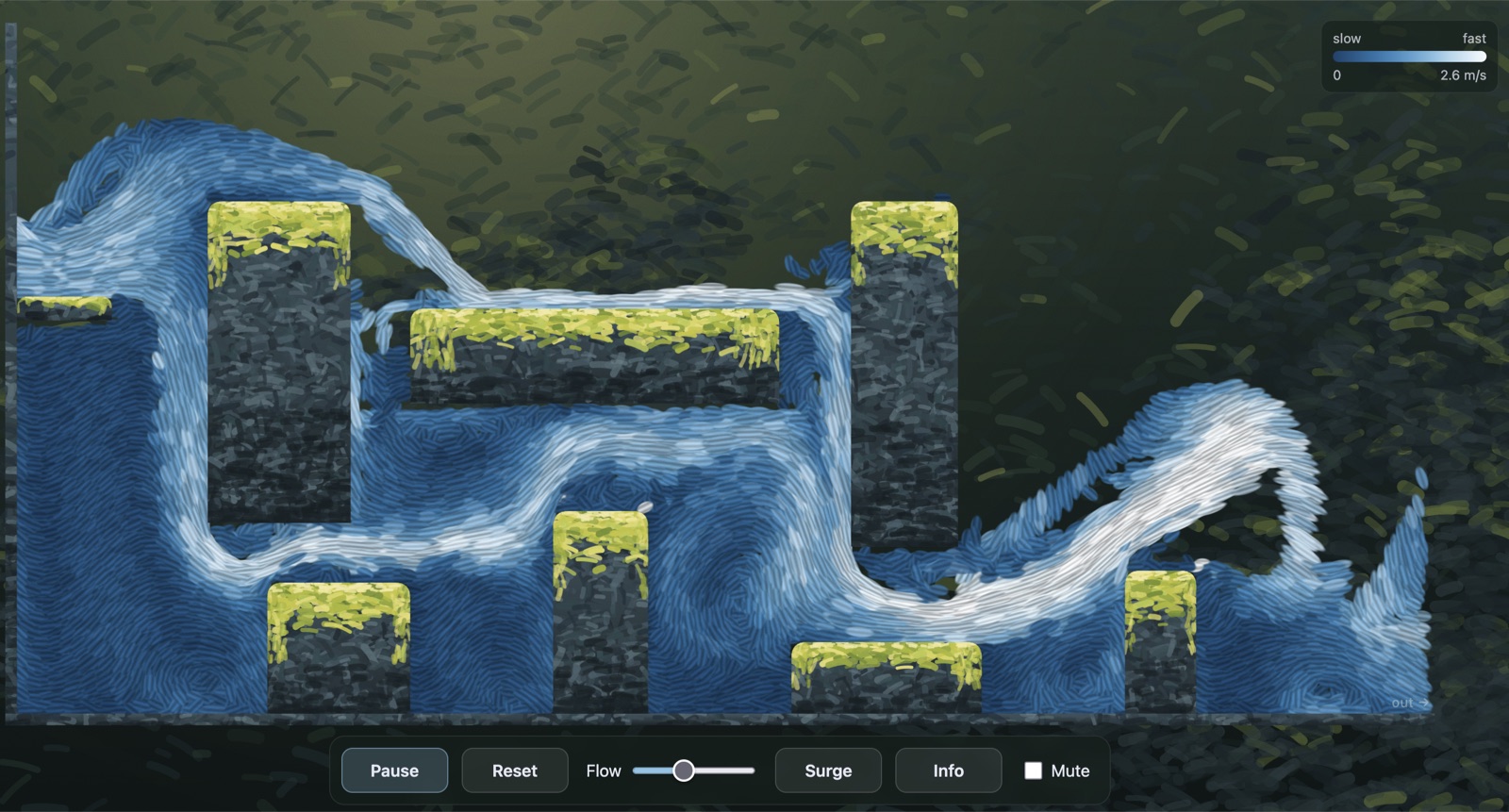
A 2D water simulation that pours over mossy rocks, painted in brush strokes that run from deep blue to white foam the faster the water moves, with a rush, splashes and a swelling surf you can hear. What the Navier–Stokes equations say, why they are still unsolved, and how a few thousand particles fake a waterfall.
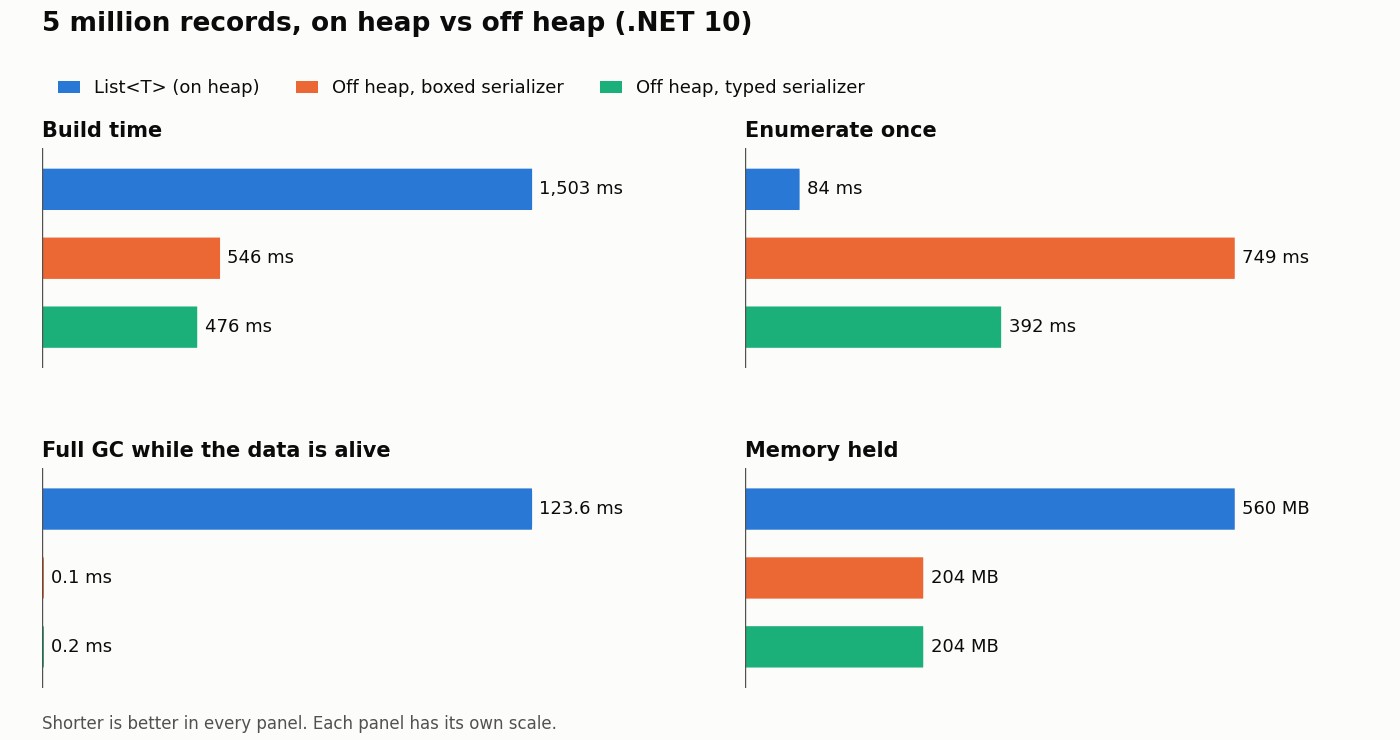
Millions of small objects in a List are cheap to read and expensive to keep around, because the garbage collector has to trace every one of them. Serializing them into native memory instead cuts memory use by almost two-thirds and makes a full GC almost free, but every read gets slower. A small C# library, a benchmark and the trade-offs.
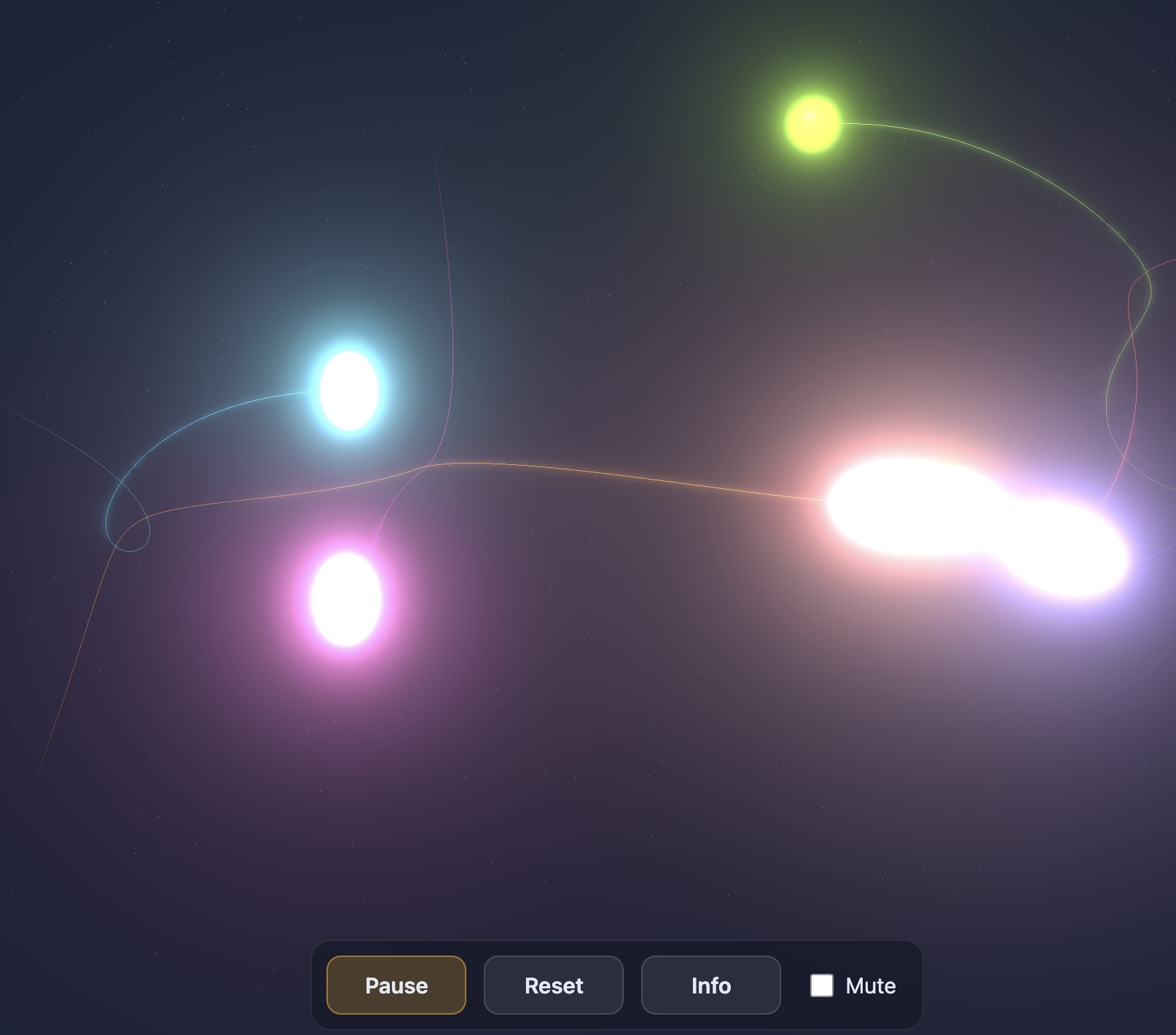
A gravity sandbox where every body glows, pulses and hums, and the closer two bodies get, the faster they pulse and wub. Why three bodies have no general solution, why they fly apart, and what happens when you turn a physics problem into something you can see and hear.
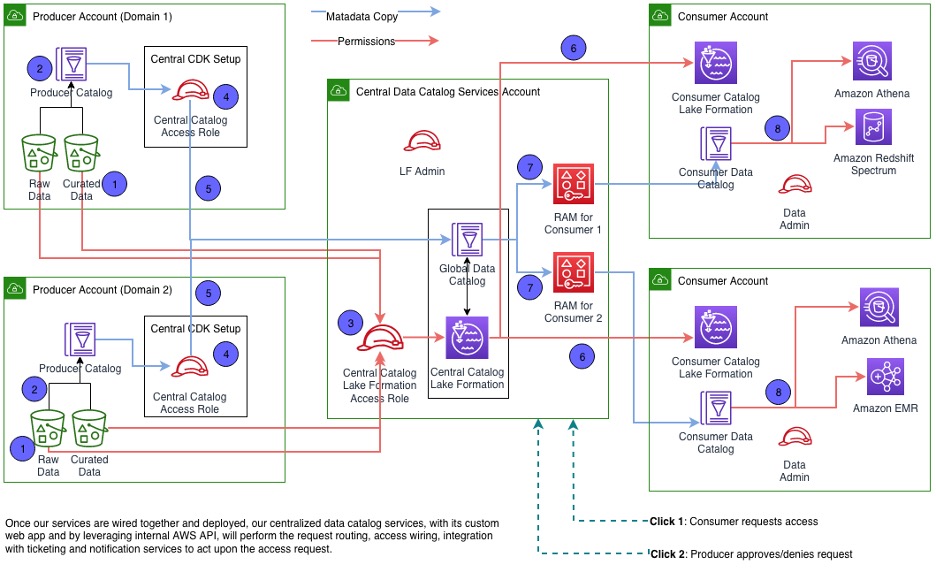
I co-wrote a post on the AWS Big Data Blog about the data mesh we built at Amazon Finance Automation, where I was the lead developer.
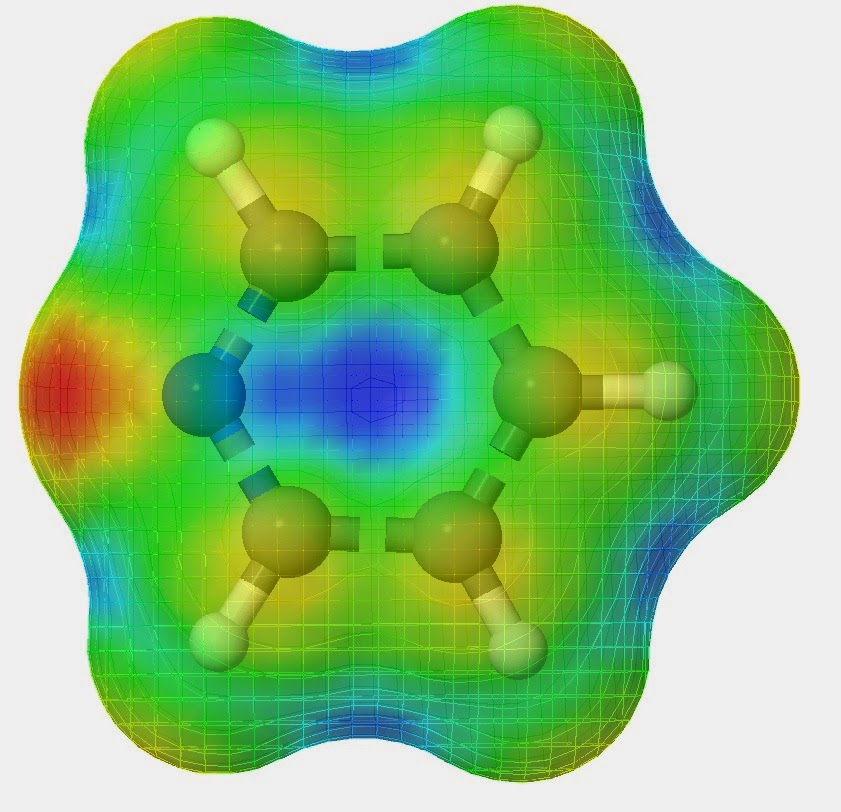
Radmap predicts where a free radical will attack a molecule. It places a single atom at every point on a surface around the molecule, computes the energy of each adduct from first principles, and paints the result back onto the molecule, red where the atom is drawn in.
A restricted Hartree-Fock solver written in Java, ported from the Fortran IV listing in the back of Szabo and Ostlund.